
The trajectory of Mr.Kosuke Iwasaki, a great man from Sanjo City who dedicated his life to making the world's best blades
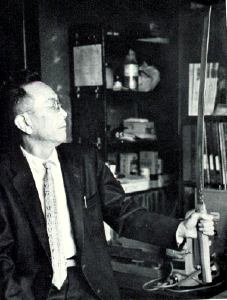
He was born on January 1, 1903, as the second son of Iwasaki Matazo, a family that had run a cutlery wholesaler in Ninomachi, Sanjo-cho.
After World War I, the family business suffered a major setback when it lost a trade battle with a recovering Germany.
After graduating from Niigata High School in March 1922, he joined the family business with his brother to help his father. Observing Sanjo's industry, particularly its cutlery, he resolved that "we'll never be able to beat Germany if we continue like this. To win, we need to uncover the secrets of Japanese swords, said to be the world's finest blades, and apply those knowledge to create knives, razors, and scissors."
In 1922, he became an apprentice to sword sharpener Nagano Sainichi, learning sword sharpening techniques. Furthermore, he felt a strong need to read ancient documents that contained the secrets of Japanese swords, and in 1925, while earning a living as a lecturer at Zushi Kaisei Junior High School, he enrolled in the Department of Japanese History, Faculty of Letters, University of Tokyo. During this time, he continued to study sword forging methods under swordsmiths Nomura Masakatsu and Horii Toshihide.
After graduating from the Department of Japanese History in 1928, he re-enrolled in the Department of Metallurgy, Faculty of Engineering, University of Tokyo, to scientifically study the manufacturing methods of Japanese swords. He continued his research in graduate school, and returned to Sanjo City in 1945. He devoted himself to manufacturing Japanese swords, known as kirigomi swords.
In 1947, he founded Sanjo Seisakusho, where he devoted himself to researching blades.
In 1951, he founded the Japan Metal Products Trade Association, and while serving as executive director, he devoted himself to researching forged blades made from tamahagane, a steel material used in Japanese swords that has very few impurities.
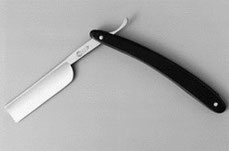
In 1953, his research into tamahagane was recognized and he received a grant for mining and industrial technology research from the Ministry of International Trade and Industry. This led to the establishment of a manufacturing system, and in December 1954, he succeeded in producing the world's sharpest razor using tamahagane.
While manufacturing and researching razors, he continued to instruct bladesmiths in groundbreaking blade-making techniques that involved scientific analysis using a metallurgical microscope, making significant contributions to improving the technology and quality of local manufacturers.
In 1966, he was appointed an investigator for Shosoin sword blades at the Imperial Household Agency.
He passed away from a recurrence of cancer in August 1967, while he was conducting scientific research on the blades and swords in Shosoin.
He was 64 years old.
References:
"Knife Knowledge" by Kosuke Iwasaki